
In-Situ Hydrocarbon Remediation
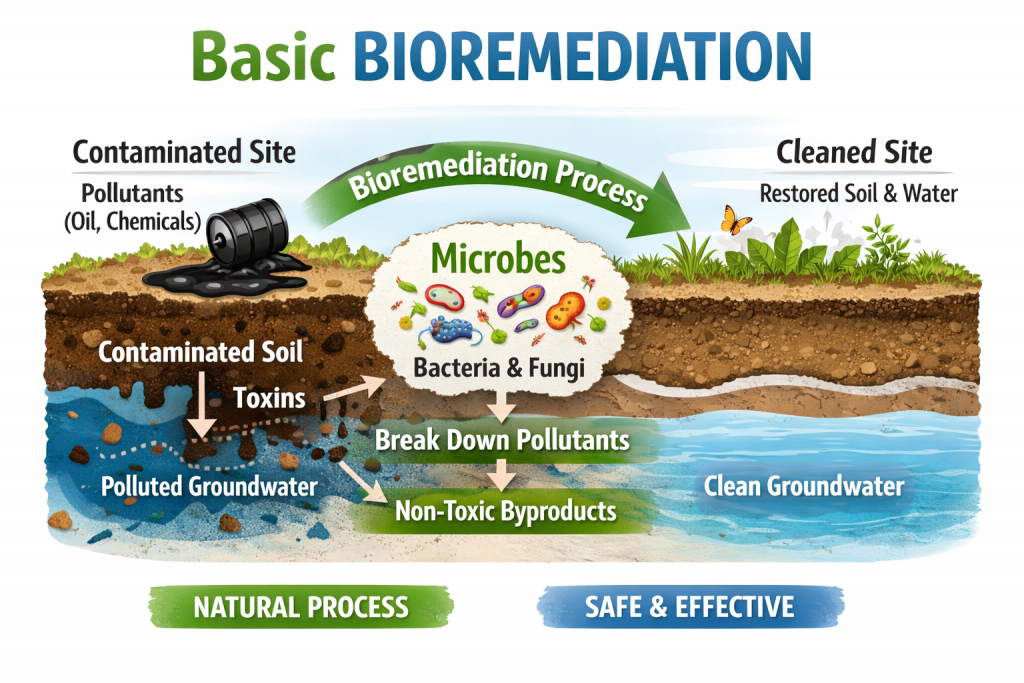
In-situ hydrocarbon remediation treats petroleum contamination directly in soil, sediment, and groundwater without excavation. Biological remediation technologies can accelerate the natural breakdown of hydrocarbons, helping environmental professionals restore contaminated sites with minimal disruption.
What Is In-Situ Hydrocarbon Remediation?
Hydrocarbon contamination can occur when petroleum products such as diesel fuel, gasoline, crude oil, or lubricants are released into the environment. Traditional remediation approaches often involve excavating contaminated soil and transporting it to treatment facilities.
In-situ remediation treats the contamination directly at the site. Instead of removing impacted soil or sediment, remediation technologies enhance natural degradation processes within the environment.
Why Environmental Professionals Use In-Situ Remediation
Reduced Site Disruption
Treating contamination in place eliminates the need for large excavation projects and reduces disruption to infrastructure and ecosystems.
Lower Remediation Costs
Avoiding excavation and soil transport can significantly reduce remediation costs, especially for large or difficult-to-access sites.
Effective Hydrocarbon Treatment
Biological remediation processes can degrade many petroleum hydrocarbons naturally when conditions are optimized.
How Biological Hydrocarbon Remediation Works
Many naturally occurring microorganisms can metabolize petroleum hydrocarbons as a source of carbon and energy. Biological remediation technologies enhance these natural processes to accelerate contaminant degradation.
Increase Hydrocarbon Bioavailability
Biosurfactant formulations help hydrocarbons become more accessible to microbial degradation.
Stimulate Microbial Activity
Enhanced environmental conditions support the growth of hydrocarbon-degrading microorganisms.
Accelerate Natural Breakdown
Microbial processes convert hydrocarbons into carbon dioxide, water, and biomass.
Common Applications of In-Situ Hydrocarbon Remediation
Petroleum releases from storage tanks and industrial operations frequently contaminate soil.
Shoreline and sediment contamination
Oil spills can impact coastal environments where excavation may cause ecological damage.
Soil contamination from fuel spills
Petroleum releases from storage tanks and industrial operations frequently contaminate soil.
Industrial site remediation
Rail yards, terminals, and fuel storage areas often require hydrocarbon cleanup.
PES-31 Biological Remediation Technology
PES-31 supports in-situ hydrocarbon remediation by enhancing the natural biodegradation of petroleum contaminants. The formulation helps increase hydrocarbon bioavailability and supports microbial degradation processes in contaminated environments.
Request Technical Information
Environmental professionals evaluating hydrocarbon remediation options can request technical documentation and application guidance from PES.