
PES-31 Applications
Landfarming Bioremediation for Contaminated Soil
Landfarming bioremediation for contaminated soil using PES-31 helps treat petroleum-impacted soil through managed field programs designed to support biological hydrocarbon breakdown.
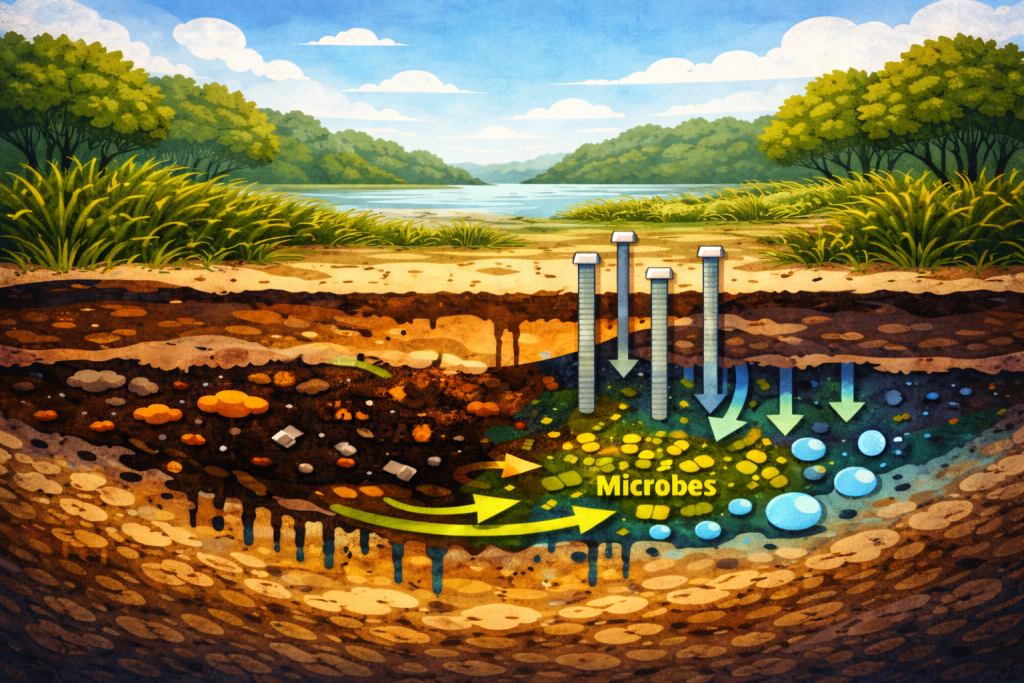
Where PES-31 Fits
PES-31 is used in landfarming bioremediation for contaminated soil where petroleum impacts can be treated through managed soil handling, moisture control, nutrient support, and repeated working of the treatment area. It fits projects where contaminated soil is placed or managed in a controlled treatment zone rather than left untreated or hauled away as the only option.
Why Landfarming Requires Active Management
Landfarming is not just a matter of spreading contaminated soil and waiting. Treatment performance depends on how well the soil is managed over time. Petroleum concentration, soil condition, moisture, aeration, nutrient levels, and mixing all affect whether the treatment area continues to support biological activity. Without active management, contaminated soil can remain unevenly treated and cleanup timelines can stretch out.
How PES-31 Supports Landfarming
PES-31 is used where contaminated soil is being treated through landfarming or other managed soil-treatment methods. It fits petroleum cleanup programs that rely on biological treatment within the soil matrix and need a practical product that can be applied as part of a broader field remediation process involving tilling, disking, moisture management, and nutrient support.
Landfarming Workflow Fit
Typical Soil and Contamination Types
PES-31 can be used in contaminated soil affected by diesel, waste oil, crude oil, jet fuel, and related petroleum hydrocarbons. It fits treatment areas where soil is managed in place or in designated landfarming or treatment-cell environments for ongoing bioremediation.
Field Application Approach
PES-31 is mixed thoroughly before use and can be applied directly or mixed with water to improve distribution and add moisture to dry soil. In landfarming programs, treatment commonly includes tilling, disking, or other soil-working methods to improve contact, aeration, and consistency across the treatment area.
Conditions That Support Treatment
Landfarming bioremediation works best when the treatment area is managed over time. PES-31 guidance emphasizes oxygen, moisture, nutrients, and suitable pH conditions as important parts of the biological process. Reapplication, soil working, and site-specific adjustments may all be part of the treatment program as conditions change.
Supported Landfarming Applications
PES-31 fits petroleum-contaminated soil treatment programs where managed landfarming or treatment-cell methods are part of the cleanup plan.
- Landfarming of petroleum-contaminated soil
- Treatment-cell soil bioremediation
- Diesel-contaminated soil treatment
- Waste oil soil cleanup
- Crude oil impacted soil treatment
- Jet fuel contaminated soil treatment
- Managed soil treatment areas
- Field programs requiring moisture and nutrient support
Why Teams Evaluate PES-31 for Landfarming
- Fits managed treatment areas for contaminated soil
- Supports biological treatment within field landfarming programs
- Useful across multiple petroleum contamination types
- Can be used with soil working, moisture control, and nutrient management
- Well suited to practical long-duration soil cleanup programs
Landfarming Bioremediation FAQ
What is landfarming bioremediation?
Landfarming bioremediation is the managed treatment of petroleum-contaminated soil through biological activity, usually with repeated soil working, moisture control, and other field measures that support hydrocarbon breakdown.
What kinds of contamination can PES-31 be used on in landfarming?
PES-31 can be used on contaminated soil involving diesel, waste oil, crude oil, jet fuel, and related petroleum hydrocarbons where landfarming is the appropriate treatment method.
How is PES-31 used in a landfarming program?
PES-31 is mixed thoroughly before use and can be applied directly or mixed with water for better distribution and moisture support. Landfarming programs often also include tilling, disking, nutrient management, and ongoing monitoring of treatment conditions.
What conditions matter most in landfarming treatment?
Moisture, oxygen, nutrients, and suitable pH conditions all matter. Consistent soil working and practical site management are also important for maintaining progress over time.
Review PES-31 Technical Information
For supporting details and related field examples, review the PES technical documents and case histories after exploring the main landfarming content.