
PES-31 Applications
Diesel Spill Bioremediation
Diesel spill bioremediation using PES-31 helps treat petroleum-contaminated soil, ballast, rock, and related media through practical field methods that support biological hydrocarbon breakdown.
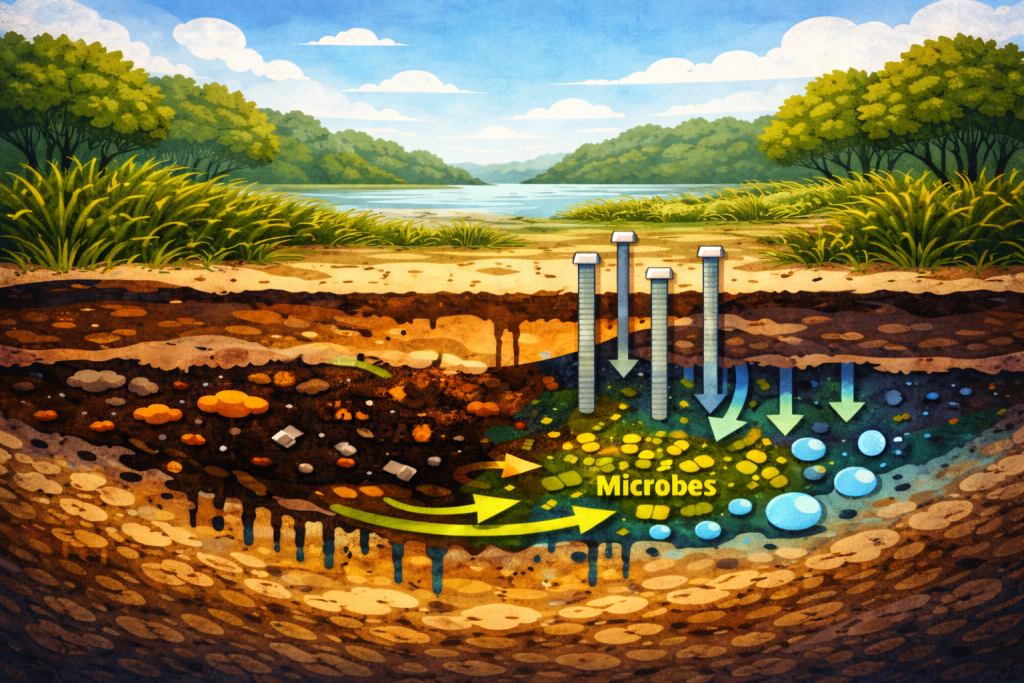
Where PES-31 Fits
PES-31 is used in diesel spill bioremediation where diesel contamination affects soil, ballast, rock, or related media and must be treated through practical biological remediation methods. It fits spill-response follow-up work where contamination remains in place and the cleanup plan calls for field-manageable treatment rather than surface cleaning alone.
Why Diesel Spill Cleanup Gets Difficult
Diesel contamination can spread unevenly through soil, ballast, and coarse materials, making cleanup more difficult than a simple surface wash. The affected area may include multiple depths, variable soil conditions, and operational constraints that limit excavation or removal. Diesel spill cleanup becomes more challenging when the goal is to treat contamination within the media rather than just remove visible residue.
How PES-31 Supports Diesel Spill Bioremediation
PES-31 is used where diesel-contaminated media must be treated through biological activity as part of a practical field remediation program. It fits applications involving contaminated soil, ballast, rock, and related media where oxygen, moisture, nutrients, and site management are important to supporting hydrocarbon breakdown over time.
Diesel Spill Treatment Workflow Fit
Typical Media and Site Conditions
PES-31 can be used in diesel-contaminated soil, ballast, rock, and related hydrocarbon-impacted media. It fits field conditions where diesel has migrated into the treatment zone and the cleanup approach relies on biological treatment within the media itself.
Field Application Approach
PES-31 is mixed thoroughly before use and can be applied directly or mixed with water to improve distribution and moisture support. Depending on the site, soil working, nutrient addition, and repeated treatment may also be part of the overall diesel spill remediation program.
Case History Support
PES-31 case histories include diesel-contaminated sites involving railroad ballast, soil, and rock where field bioremediation methods were used to reduce petroleum contamination over time.
Supported Diesel Spill Applications
PES-31 fits diesel spill cleanup programs where contamination must be treated within the affected media through field bioremediation.
- Diesel-contaminated soil treatment
- Railroad ballast remediation
- Rock and coarse media treatment
- Field-managed diesel spill cleanup
- In-place petroleum remediation
- Hydrocarbon treatment in operational areas
- Bioremediation programs requiring repeated field management
- Site cleanup involving diesel-impacted media
Why Teams Evaluate PES-31 for Diesel Spills
- Fits diesel contamination in soil and coarse media
- Supports biological treatment within the affected zone
- Useful where excavation is not the only preferred option
- Can be used in practical field remediation programs
- Applicable to longer-duration cleanup efforts
Diesel Spill Bioremediation FAQ
What kinds of diesel-contaminated media can PES-31 be used on?
PES-31 can be used on diesel-contaminated soil, ballast, rock, and related petroleum-impacted media where bioremediation is the appropriate cleanup method.
Can PES-31 be used for railroad or coarse ballast cleanup?
Yes. PES-31 fits diesel spill cleanup applications involving railroad ballast and other coarse media where contamination must be treated within the affected material.
How is PES-31 applied in diesel spill remediation?
PES-31 is mixed thoroughly before use and can be applied directly or mixed with water to improve distribution and moisture. Depending on the site, soil working, nutrient support, and repeated application may also be part of the treatment approach.
What conditions matter most in diesel spill bioremediation?
Moisture, oxygen, nutrients, and suitable pH conditions all matter, along with practical site management of the contaminated treatment zone over time.
Review PES-31 Technical Information
For additional field examples and supporting product guidance, review the PES technical documents and case histories.